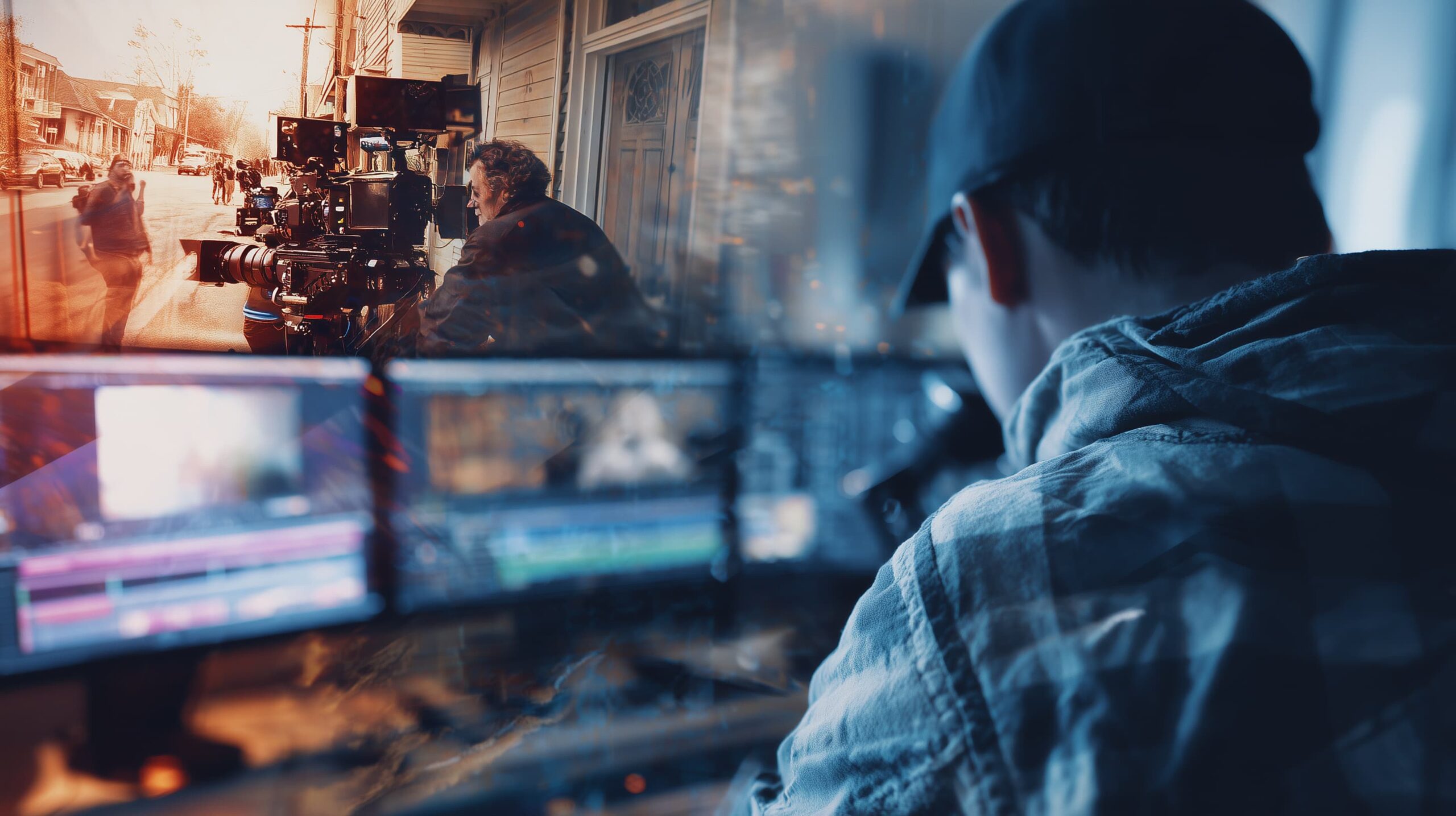
Cinema is often celebrated as the art of performance, but what audiences ultimately see is never the performance alone. Between the actor’s work on set and the viewer’s experience lies one of filmmaking’s most powerful creative forces: editing. The final cut of a scene can subtly refine, significantly reshape, or even radically reinterpret what an actor has done. This dynamic creates a fascinating tension – not a conflict of opposition, but a complex relationship between two distinct forms of authorship.
For actors, performance unfolds in real time. Emotions are built, reactions are timed, and rhythms emerge through interaction with fellow performers and the physical environment. Even within the technical constraints of filmmaking, acting remains a continuous human process. The performer experiences the scene as a living sequence of psychological and emotional transitions.
Editing, by contrast, is the art of reconstruction. It breaks apart that continuity and reassembles it into a new temporal structure. A scene that felt fluid on set may be composed of dozens of fragments in the editing room. The editor determines pacing, emphasis, and sometimes even meaning. In doing so, editing becomes an invisible collaborator – or, from another perspective, an invisible author.
One of the most immediate ways editing transforms acting is through rhythm. Timing is central to performance. A pause, a glance, a hesitation – these micro-elements carry emotional significance. Yet the editor ultimately controls how long a moment lasts on screen. A hesitation may be shortened to accelerate tension or extended to heighten discomfort. The internal tempo of the actor’s work becomes subject to reinterpretation.
This process reveals an essential truth about film acting: performance is not fixed at the moment of execution. It is malleable, capable of acquiring different emotional textures depending on how shots are arranged. The same line delivery may feel tender, ironic, or ominous depending on the surrounding edits. Meaning emerges not only from what the actor does, but from how those actions are framed and sequenced.
Reaction shots illustrate this principle vividly. An actor’s expression may acquire entirely new significance when juxtaposed with another character’s dialogue or action. A neutral look can become judgmental, amused, or sorrowful depending on context. Editing effectively constructs emotional relationships between images, guiding audience interpretation without altering the original performance.
For actors, this can be both empowering and unsettling. On one hand, editing can enhance a performance, sharpening its impact or clarifying its intention. On the other, it can produce results that diverge from the performer’s expectations. A carefully calibrated emotional progression may be restructured. A subtle moment may be omitted. A minor reaction may gain unexpected prominence.
Such transformations are not necessarily distortions. Cinema is inherently collaborative, and performance exists within a larger system of storytelling. Editing serves narrative coherence, dramatic tension, and visual clarity. Yet from the actor’s perspective, the final version of a scene may differ significantly from the lived experience of filming it.
Continuity provides another area where editing exerts profound influence. Film performances are constructed from multiple takes, often captured from different angles and distances. An actor may vary nuances slightly between takes – a gesture, inflection, or emotional intensity. The editor selects and combines these fragments, creating a composite performance that never existed in a single uninterrupted moment.
This composite nature complicates traditional notions of authorship. Who “owns” the performance that appears on screen? The actor supplies raw material, but editing determines its final form. Performance becomes a negotiated outcome, shaped by choices made long after filming concludes.
Emotional logic is especially sensitive to editorial decisions. Actors typically approach scenes with a sense of internal progression. Feelings evolve, tensions escalate, and reactions respond to preceding events. Editing may reorganize this flow for narrative or pacing reasons. Shots captured hours apart may appear as contiguous seconds. Emotional transitions may be compressed or expanded.
In some cases, editing can even generate emotional effects independent of the actor’s conscious intent. Juxtaposition of images can create irony, ambiguity, or tension not explicitly performed. A smile followed by an unexpected cut may feel sinister. A moment of silence extended through editing may intensify vulnerability. The audience’s emotional response arises from cinematic construction rather than performance alone.
The camera’s perspective further amplifies editing’s power. Close-ups, wide shots, and insert details each carry different expressive potentials. Editors determine when viewers inhabit intimacy or distance. A performance delivered within a wide shot may emphasize physicality, while a close-up magnifies micro-expressions. The editor’s sequencing of these scales influences how the actor’s work is perceived.
Importantly, editing does not merely manipulate time; it shapes attention. Viewers see what the edit directs them to see. Emphasis can shift between characters, gestures, or environmental details. A line of dialogue may gain or lose weight depending on visual focus. Performance becomes part of a broader choreography of perception.
Despite these complexities, actors and editors are not adversaries. Their contributions operate on different yet complementary levels. Acting generates human behavior, emotional authenticity, and psychological presence. Editing organizes those elements into narrative structure and experiential rhythm. The tension between performance and edit is not antagonistic but creative.
Experienced actors often anticipate editorial transformation. They understand that film acting involves providing usable material rather than dictating final outcomes. Consistency, clarity, and adaptability become essential. Performers learn to deliver variations that accommodate editorial flexibility while preserving character integrity.
Directors play a mediating role in this relationship. Their vision guides both performance and editing, ideally harmonizing the two. When alignment is strong, editing enhances rather than disrupts acting. When misalignment occurs, performances may feel fragmented or tonally inconsistent.
The audience rarely perceives this intricate interplay consciously. Viewers encounter a seamless illusion of continuity, unaware of the editorial decisions shaping emotional experience. Yet the effectiveness of cinematic storytelling depends heavily on the integration of acting and editing. Memorable scenes often derive their impact from precise coordination between performance dynamics and editorial rhythm.
In certain instances, editing can rescue a performance. A scene that felt uneven on set may acquire coherence through careful selection and pacing. Conversely, editing can weaken strong acting if rhythm or emphasis misfires. The final cut becomes the definitive version, superseding all prior iterations.
This reality underscores a defining characteristic of cinema: performance is not a singular event but a process extending from set to screen. Actors create possibilities; editing determines realization. The scene audiences remember is neither purely acted nor purely edited, but the result of their interaction.
Understanding this relationship deepens appreciation for film as a collaborative medium. It challenges simplistic assumptions about performance and highlights the fluidity of cinematic meaning. The actor’s work is indispensable, yet incomplete until shaped by editorial interpretation. The editor’s craft is transformative, yet dependent on the actor’s expressive material.
Ultimately, the final cut does not negate performance; it redefines it. What appears on screen is a version of the actor’s work filtered through narrative logic, visual rhythm, and creative judgment. In this sense, editing does not compete with acting but completes its journey – converting lived moments into cinematic