The breaks between projects rarely look the way they seem from the outside. Then, your external rhythm disappears, and you begin to see how much control you have without deadlines, directors, or a shooting schedule. During this period, many actors either lose their form or—much less often—build a foundation that later shows up on screen. So how can we avoid dissolving into silence?
Why continue acting when no one’s expecting you?
Acting doesn’t operate in a “turn it on during filming and turn it off afterward” mode. It’s either maintained or slowly disintegrates into habits and clichés. During breaks between projects, experienced actors almost never stop working with the material; rather, they change its nature. The pressure of results, casting, and evaluation disappears—pure practice remains.
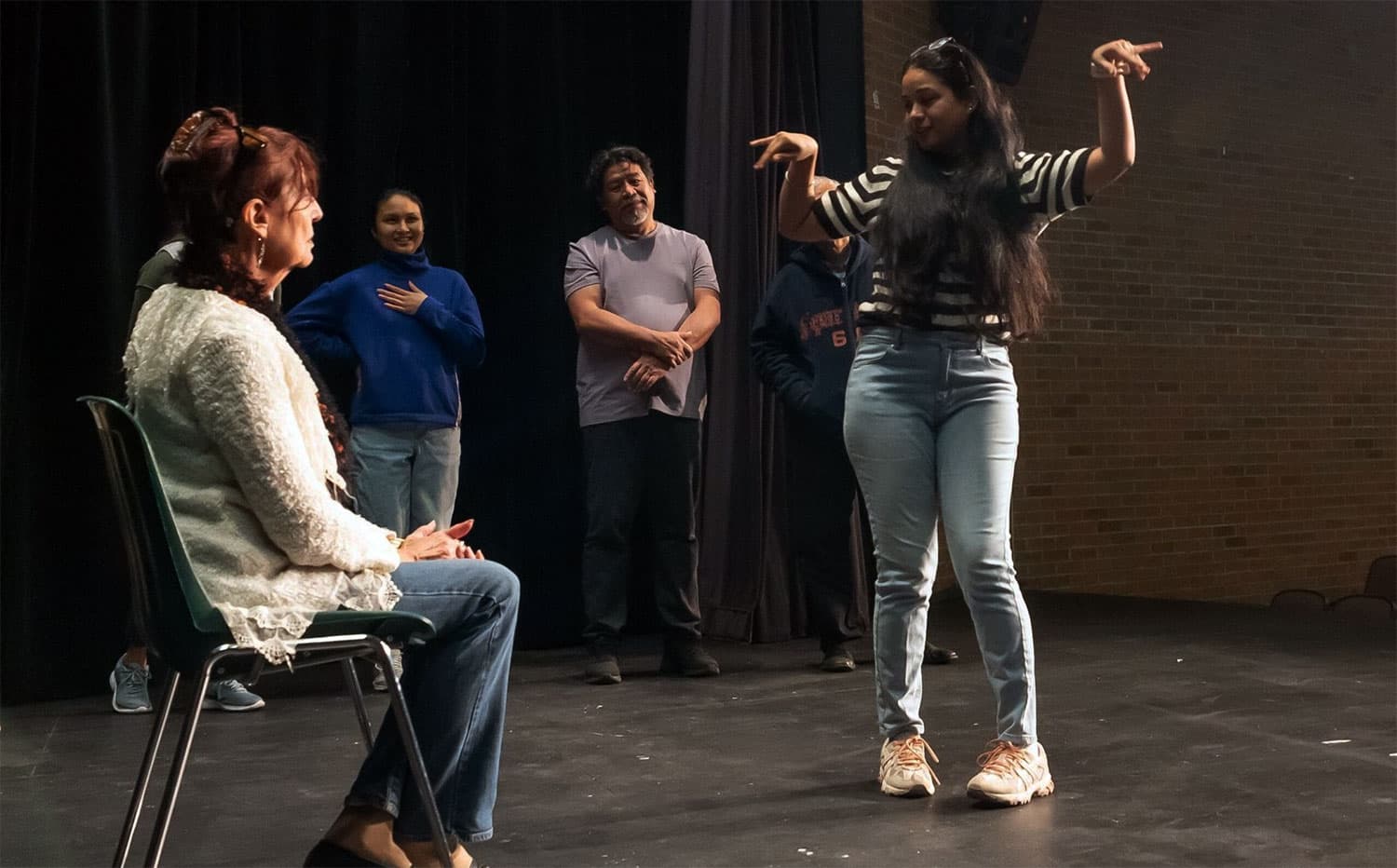
This includes working with monologues that clearly go nowhere, reading scenes without intending to show them, and exploring characters without a final image. This restores freedom and reduces the fear of making mistakes. When you don’t have to “hit the mark,” you begin to listen to yourself more precisely: where your reaction is lively and where it’s automatic, where the pause is filled and where it’s empty.
It’s also important that during such periods, you experiment more often. You change the tempo, break the usual delivery, and try out uncomfortable registers. This is almost impossible to do on a set where every hour costs money. Between projects, you can afford to be imprecise—and that’s what makes subsequent work more precise.
Skills with no immediate payoff and maturing the profession
The hardest part of the breaks between projects is working on something that won’t yield immediate results. Diction, languages, accents, camera skills, and script analysis require time and patience. It’s easy to give up because there’s no external confirmation that you’re moving in the right direction.
Many actors broaden their professional horizons during these periods by studying editing, casting principles, directing, and script structure to break away from the isolation of acting. Understanding the process reduces anxiety and makes you a more effective partner on set.
The financial side of the profession also comes to the fore during breaks. When your income is irregular, you are forced to be more mindful of your money, so you often give up digital services, educational subscriptions or betting on Italian siti scommesse non AAMS senza registrazione, giving you more time to focus on your professional development.
Why form isn’t about appearance
During filming, the body lives in a set rhythm: shifts, movements, anticipation, and concentration. When this rhythm disappears, the body is the first to signal a loss of form—through stiffness, fatigue, and loss of sensitivity. Actors who treat their bodies as instruments rarely rely on a single type of activity. They prioritize range over results.
Regular breathing work, gentle strength training, mobility, and stretching—none of this looks spectacular, but it directly impacts the ability to quickly enter a state, change physical presence, and maintain focus on the camera. Good form means the body doesn’t interfere with the task and doesn’t require constant monitoring.
Attention is trained alongside the body. Without it, any exercise becomes mere mechanics. Observing people—on public transportation, in cafes, or in lines—remains one of the most underrated practices. It’s all about understanding rhythms: how a person pauses, where they hide their emotions, and how their body reacts before words.
How to avoid losing yourself during periods of silence
Between projects, the greatest pressure on an actor is the lack of external validation of their own worth. When there are no castings, calls, or filming schedules, it’s easy to start measuring yourself by the number of rejections or the silence in your inbox. At this point, either dependence on external validation or internal resilience develops, without which only a few can sustain a long career.
Many actors consciously develop a routine unrelated to their profession during such periods. Paradoxically, the less you check daily to see if something has come up, the more calmly you work on yourself, and the more accurately you approach the next opportunity. Self-esteem requires special attention. During lulls, it’s noticeable how easily actors begin to compare themselves to others—in terms of roles, reach, and social media success. Experienced professionals try to avoid this comparison, recognizing that careers rarely progress linearly. Someone else’s surge in activity doesn’t mean you’re declining, and silence doesn’t equal stagnation.
Finally, breaks are a time for an honest conversation with yourself about which roles and formats truly interest you. Without the pressure of a specific project, it’s easier to admit that some goals have become outdated, while others, on the contrary, have long been awaiting attention. This reassessment often becomes a point of growth: an actor returns not just “in shape,” but with a clearer understanding of why they even step onto the set.
This psychological layer is rarely discussed out loud, but it is precisely this that determines whether you can endure not one, but ten periods of silence. Because in the acting profession, pauses are inevitable—the only question is whether they will be destructive or productive.
Why pauses shape actors
Filming tests readiness, but it doesn’t create reserve. True depth emerges in gaps where there is no external control. Here, it becomes clear whether you rely solely on circumstances or are capable of developing internal discipline. Actors who perceive pauses as emptiness often lose confidence. Those who use them as a space to adjust return to work more precisely and calmly.
If we boil down the experience of many professionals to practical guidelines, the following habits work best between projects:
- regular acting practice without the goal of immediate results;
- physical work focused on movement and breathing, not form;
- observing real people and capturing details of behavior;
- developing skills that don’t yield immediate results but increase range;
- expanding one’s understanding of the profession beyond the acting task.
Life between projects is not a career break or a wait for “real work.” It is a place where the profession either simplifies or deepens. And it is precisely how you experience these periods that determines who you will be on the next stage as – a person who is simply ready, or an actor who has something to offer.